
The Father You Never Knew How to Grieve
The hidden loss many gay men spend decades trying to repair.
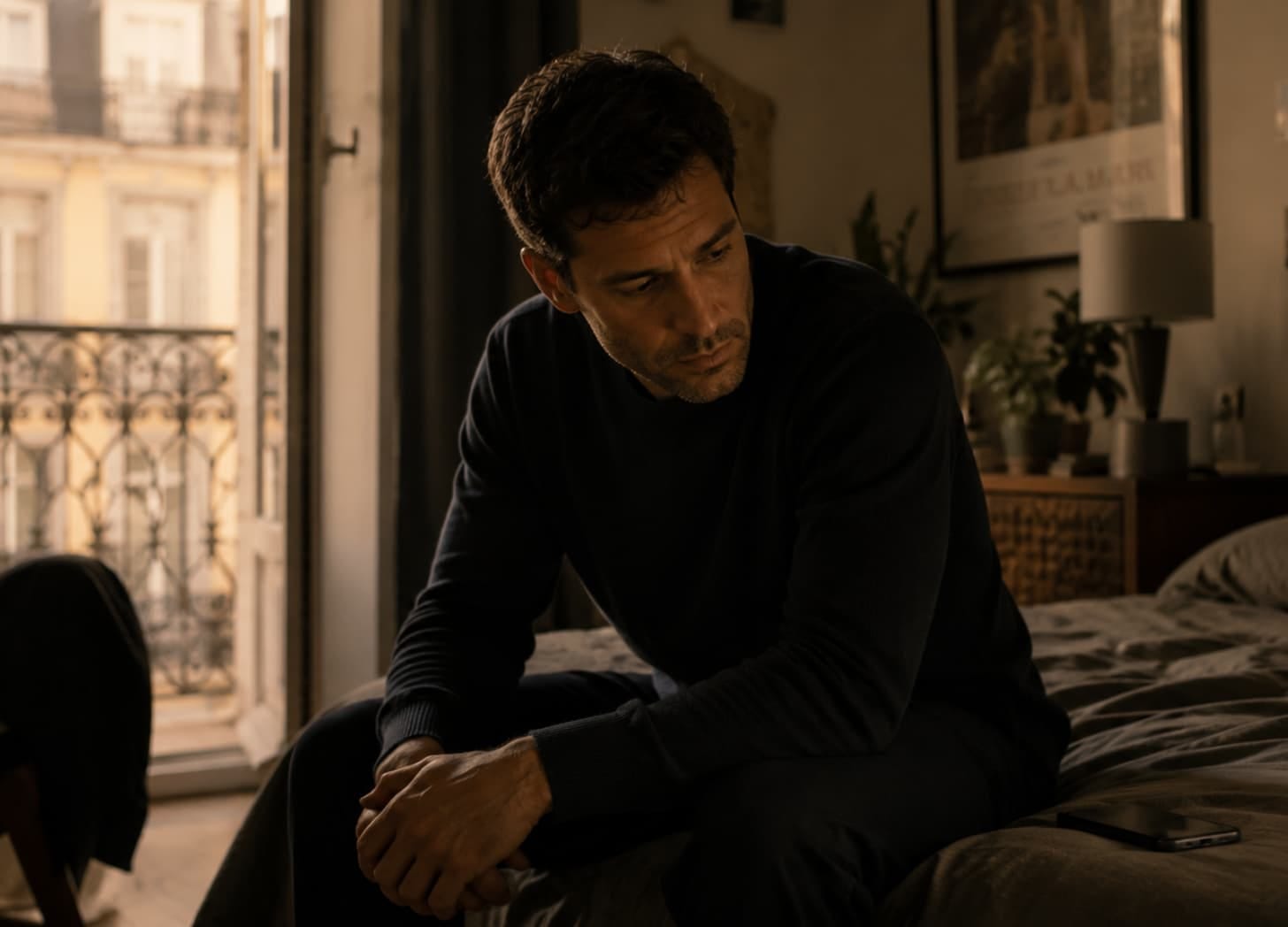
Three minutes, maybe four. The dog was fine. The brother had got a promotion. He said the right things back, hung up, and sat on the edge of the bed for a long time.
He didn’t know why he was crying.
He told me about it the next week. A man in his late thirties, who is sometimes partnered, describing a call that on paper contained nothing. No cruelty or abandonment. A pleasant exchange.
Underneath the pleasantness, something that had been sitting in his sternum for thirty years, finally surfacing because for once he was tired enough not to push it down.
The wound the family doesn’t have a name for
Most gay men I work with assume their father wound is one of two stories. The father who left. The father who was cruel. Both of those have edges. You can recognize them and be angry, in categories everyone recognises. There is a shape to the grief and a culturally available script for it.
The wound most of them carry has neither.
The father didn’t leave. He didn’t hit. By most measures he was decent. He shows up at Christmas, sends the birthday text, asks how work is going, and listens for the answer about 30% of the way through.
Somewhere around the boy’s seventh, eighth, ninth year, something cooled. In a slow recalibration the boy registered as a “data point” before he could name it. The roughhousing thinned out. The praise got more conditional, the eye contact briefer; the way you look at a colleague rather than a son. The warmth that had been default became something you had to earn, and the boy was no longer sure what was acceptable and what wasn’t.
The father probably doesn’t remember pulling back. He may not have done it consciously. He saw something or sensed something his own conditioning told him to handle by adjusting the temperature instead of talking about it. The blueprint did the rest.
The mechanism has been written about. What hasn’t been written well is what happens to a grief that has no funeral, and a relationship that ends without anyone admitting it ended.
The grief that keeps happening
Grief, in our culture, requires a body. A death or at least a departure. A funeral, a breakup. Something with a clean before-and-after that other people can also see.
The loss I’m writing about has none of that.
The man on the phone has the same surname, the same voice, the same general repertoire of small-talk topics. Nothing visibly is broken. There is no service to attend. There is no widow’s sympathy card. No one in the family will ever say “I’m sorry for the relationship you lost,” because, as far as the family is concerned, the relationship is still there. He calls. He shows up. He paid for the flight last Christmas.
That’s the half of it most people can see.
The half people miss is this. When grief doesn’t get a funeral, it stays unfinished. When grief is also being actively reproduced, it doesn’t stay still long enough to finish. Every birthday call makes wound more painful. Every Christmas dinner is another new small bereavement. The thirty-year-old loss is also, somehow, happening on a weekday afternoon, when his father uses the formal voice and asks about work.
This is what most gay men miss when they try to work on this in therapy. They treat the wound as a historical event to be metabolised. The wound is a present-tense dynamic that resets every time the phone rings.
Two fathers
What keeps the grief from being processed, more than the missing funeral, is a conflation of sorts.
You keep dialling the polite stranger hoping the man who threw you into the air when you were young will answer. You bring the sanitised version of your life home at Christmas. You watch the man at the dinner table and you keep scanning his face for the warm one underneath, and you keep finding small glimpses, and the small glimpses keep you hoping. He laughs at something. He asks a question that lands more than his usual ones. You start to think maybe, this time.
That hoping is what’s keeping the wound open.
As long as you see the present man as a damaged copy of the lost one, you are depositing fresh grief into the same account. The one that remembers the glimpses that didn’t deliver. Or the visits that left you with a hollow feeling you can’t quite name. The wound is being refreshed, grows even, in real time with every contact.
The recognition that changes everything is this: You have two fathers now.
One of them went somewhere when you were nine. He took the rough warmth and the willingness to look at you like a son, and he didn’t come back. He is grievable, the way anyone who is gone is grievable.
The other is the man on the phone. He shares the first one’s body and surname and most of his memories, but he is someone else. Someone you can have some other kind of relationship with. You can accept him as the person he is, or end it. What you can’t do is keep treating him as a faulty version of the man you lost. He’s a different person, occupying the same body.
The wound the first father left remains open. What changes is that you stop adding to it.
This is what you get
This part is what most therapy says badly, or doesn’t say at all. Like most things, you don’t get to fix this. You also don’t get the father back. You won’t experience that moment where he says the thing your younger self needed to hear. The man who could have said it isn’t there anymore and the man who is there doesn’t remember the version of himself who knew you well enough to say it.
What you get is the option to stop hoping. That sounds smaller than it is.
The hoping has been wearing you down for decades. It’s the engine of the freshly-bereaved-twice-a-year cycle. (I wrote about the wider pattern in Stop Hoping Your Family Will Change.) His voice on the phone sounds like the original man’s voice. Some Christmas mornings, his face almost looks like the original man’s. The hoping has fuel.
Stopping it is not a transcendent move. It’s a small, emotionally brutal recalibration. The original father isn’t coming back. The man you now see is someone else. You will need to grieve the first one and figure out the second one separately, on different terms, in different conversations with yourself.
When the hoping stops, the grieving doesn’t end. The first father is still gone. What stops is the active production of new grief on top of the old. The loss becomes finite; something that happened, instead of something that keeps happening.
It’s a ruthless kind of mercy, and it’s the only kind on offer.
The right one isn’t at that number
The man on the bed wipes his face with the back of his hand. The dog is fine. The weather has turned.
He is crying because he just realised the man he has been waiting his whole life to hear from isn’t available at that number. And he never was. The number rings through to someone else, someone who shares the original man’s voice, who he will have to figure out what to do with separately, on his own time.
The grief he finally gets to have is the one he has been postponing his whole adult life; hoping the wrong man might one day say the right thing.
He gets to have it now. Once. Instead of forever.
The Formation Programme
Six sessions to map the patterns that keep finding you. Online worldwide.
Full refund on sessions two through six if it’s not a fit after session one.
If someone came to mind while you were reading, send it to them. Not as accusation. As recognition.
— Gino
Gino Cosme is a gay therapist writing for gay men who are done performing.
New essays are always free. Paid subscriptions hold the archive open and keep the work independent.
All examples in this piece are composites drawn from patterns observed across therapeutic work with gay men. Details have been altered to protect confidentiality. No single story represents an individual person.
This newsletter is for educational and informational purposes only. It does not replace therapy, diagnose, treat, or prevent any condition.


Oh, Gino...I had a similar relationship with my mother. We butted heads like two buttheads. Each of us refusing to budge on the idea of what our relationship should be instead of what it was. I miss her, but I don't miss having the non-body grief you describe. At least now, five-plus years after her passing, I'm able to look back, not in anger but in love. With a few battle scars. Thank you for giving me some food for thought. Cheers!